

When a pallet shifts during transport or products become damaged in storage, packaging quickly becomes more than just a purchasing decision. It becomes an operational issue that can impact efficiency, safety and customer satisfaction. That’s why understanding different industrial packaging solutions is so important. Rather than simply comparing products on price, businesses need to consider how packaging performs in real-world handling, storage and distribution environments.
The best packaging choice depends on several factors, including the product being packed, how it’s transported and stored, and any industry-specific requirements. A food manufacturer handling powders and ingredients will have very different needs compared to a construction supplier moving aggregates or an agricultural business storing seed and feed. While many packaging products fall under the same broad category, the right specification can make all the difference.
Industrial Packaging Solutions by Application
Industrial packaging covers a wide range of products, each designed to solve specific operational challenges. The most effective solution is often the one that improves handling efficiency, protects the product and supports your supply chain from start to finish.
1. Bulk Bags for Efficient Material Handling
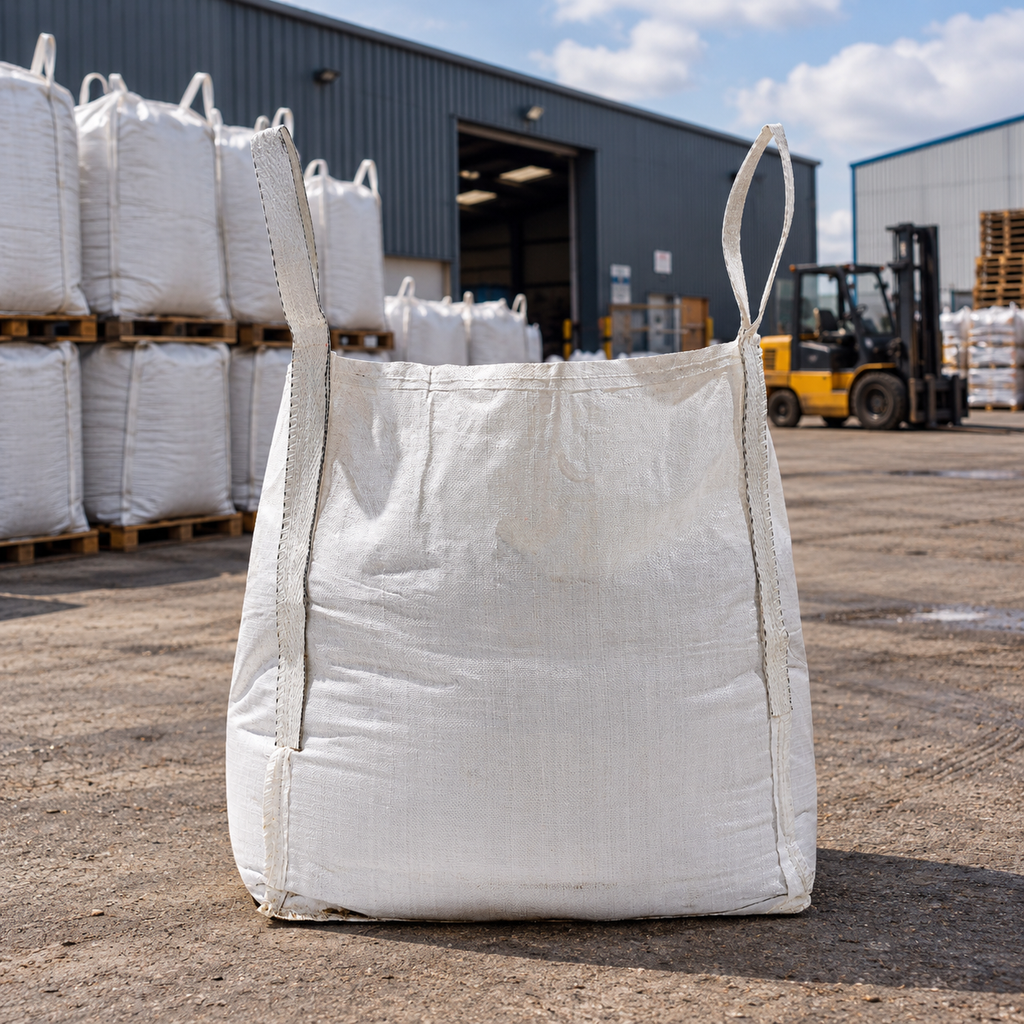
Bulk bags, also known as FIBCs (Flexible Intermediate Bulk Containers), are one of the most versatile packaging solutions available. They are widely used for transporting and storing powders, granules, aggregates, fertilisers, animal feed and other bulk materials.
Their popularity comes from their flexibility. Available with a range of filling and discharge options, lifting loop styles, liner combinations and fabric specifications, bulk bags can be tailored to suit specific applications. For example, a construction company may require standard builders’ bags for aggregates, while a manufacturer handling fine powders may benefit from a lined bag designed to minimise product loss and contamination.
Although specialist bags can involve a greater initial investment, they often help reduce waste, improve operational efficiency and lower the risk of product damage throughout the supply chain.
2. Paper Sacks for Powders and Dry Products
Paper sacks remain a popular packaging option for products such as flour, dry mixes, cement-based products, agricultural materials and powdered ingredients. Their excellent printability and professional appearance make them particularly suitable where branding and product presentation matter.
Multiwall paper sack constructions provide strength while supporting efficient filling, handling and palletisation. They can also align with sustainability objectives where the packaging format is appropriate for the product and storage conditions.
However, businesses should consider environmental conditions carefully. Exposure to moisture or extended outdoor storage can affect performance, making it important to combine paper sacks with appropriate pallet protection where necessary.
3. Woven Polypropylene Sacks for Everyday Durability
Woven polypropylene sacks are widely used across agriculture, landscaping and industrial sectors. Common applications include grain, seed, animal feed, fertilisers, sand and other free-flowing products.
These sacks are valued for their strength, lightweight design and resistance to demanding storage and transport conditions. They perform particularly well in operations involving frequent handling, movement and varying warehouse environments.
The right sack specification will depend on factors such as product weight, filling methods, closure requirements and branding needs. Selecting a durable packaging solution can help reduce breakages and improve handling efficiency throughout the supply chain.
4. Polythene Sacks and Liners for Added Protection
Where moisture resistance, contamination control or product containment are key considerations, polythene sacks and liners provide an effective solution.
Liners can be incorporated into bulk bags or other packaging formats to help protect products from moisture ingress, contamination and leakage. This is particularly important for fine powders, hygroscopic materials and sensitive products where product quality must be maintained from filling through to end use.
In many cases, packaging performance comes from combining multiple layers of protection. An outer package may provide handling strength, while an internal liner offers the barrier protection needed to preserve product integrity.
Packaging Solutions for Safe Transport and Storage
While primary packaging plays a vital role, transport stability is equally important. Poor load security can result in product damage, safety concerns and avoidable costs.
5. Stretch Wrap for Pallet Stability
Stretch wrap is one of the most widely used solutions for securing palletised goods. It helps stabilise loads during storage and transportation while offering protection against dust, dirt and handling damage.
The most effective film specification depends on factors such as pallet weight, load profile, wrapping equipment and transport conditions. A light, uniform pallet may require a different film than a heavy or irregular load.
Businesses often focus on roll price alone, but overall performance should be measured by film usage, load stability and damage reduction. Choosing the right specification can improve both efficiency and cost-effectiveness.
6. Pallet Covers and Protective Sheets
For products stored outdoors or exposed to varying environmental conditions, pallet covers and top sheets provide an additional layer of protection.
Used alongside stretch wrap, these protective solutions help shield palletised goods from moisture, dust and environmental contamination. They are commonly used across sectors such as agriculture, construction, manufacturing and chemical processing.
Even when the product itself is resilient, protecting packaging presentation and pallet integrity can help prevent issues further along the supply chain.
Specialist Industrial Packaging Applications
Some industries require packaging solutions designed for highly specific tasks, where product protection, safety and compliance are essential considerations.
7. Sandbags for Site Management and Flood Defence
Sandbags remain an important packaging solution for local authorities, contractors, civil engineering projects and emergency response teams. Common uses include flood prevention, ballast, erosion control and temporary site protection.
Different applications demand different specifications. A sandbag designed for emergency flood defence may require different materials and performance characteristics compared to one used in routine construction or landscaping work.
This highlights an important principle in industrial packaging: products that appear similar often serve very different operational requirements.

8. Specialist Packaging for Hazardous and Regulated Waste
Certain waste streams require packaging that supports both safe handling and regulatory compliance. Specialist waste sacks and UN-certified bulk bags are commonly used for hazardous materials, contaminated waste and controlled disposal applications.
In these environments, packaging selection is a critical safety decision rather than simply a purchasing choice. The correct specification, labelling and handling procedures must work together to ensure compliance and minimise risk.
Businesses operating in regulated sectors often benefit from working with experienced packaging suppliers who can help identify the most appropriate solutions for their specific requirements.
Choosing the Right Industrial Packaging Solution with Smartlift Bulk Packaging Ireland
When evaluating packaging options, it’s important to focus on the demands of the product, handling process and operating environment.
Consider factors such as:
- Product weight and density
- Moisture sensitivity
- Risk of contamination
- Storage conditions
- Transport methods
- Loading and unloading requirements
- Industry regulations and compliance standards
It’s also useful to view packaging as a complete system rather than a single product. A bulk bag may require an internal liner, while palletised sacks may benefit from stretch wrap and pallet covers for additional protection. Looking at the entire packaging process often leads to better performance and lower overall costs.
For businesses managing multiple products or locations, the right balance between standardisation and application-specific packaging is key. While consistency can simplify procurement and training, one solution rarely fits every application.
Ultimately, the most effective industrial packaging solution is the one that supports safe handling, protects product quality and helps prevent costly issues before they occur. By selecting packaging that matches the realities of your operation, you can improve efficiency, reduce waste and create a more reliable supply chain.