

When handling food ingredients in bulk, choosing the right packaging involves much more than selecting a bag with sufficient strength or capacity. Food grade bulk bags must meet strict requirements to ensure they are suitable for storing and transporting products such as flour, sugar, grains, starches, animal feed ingredients, powders, and other food-related materials. Every component of the packaging, from the fabric and liner to stitching, labels, and printing, should be considered to help maintain product quality and safety throughout the supply chain. For manufacturers, processors, agricultural businesses, and food distributors, selecting the correct FIBC (Flexible Intermediate Bulk Container) helps minimise contamination risks and supports compliance with food safety standards. The right bulk bag solution can also improve handling efficiency, storage performance, and traceability.
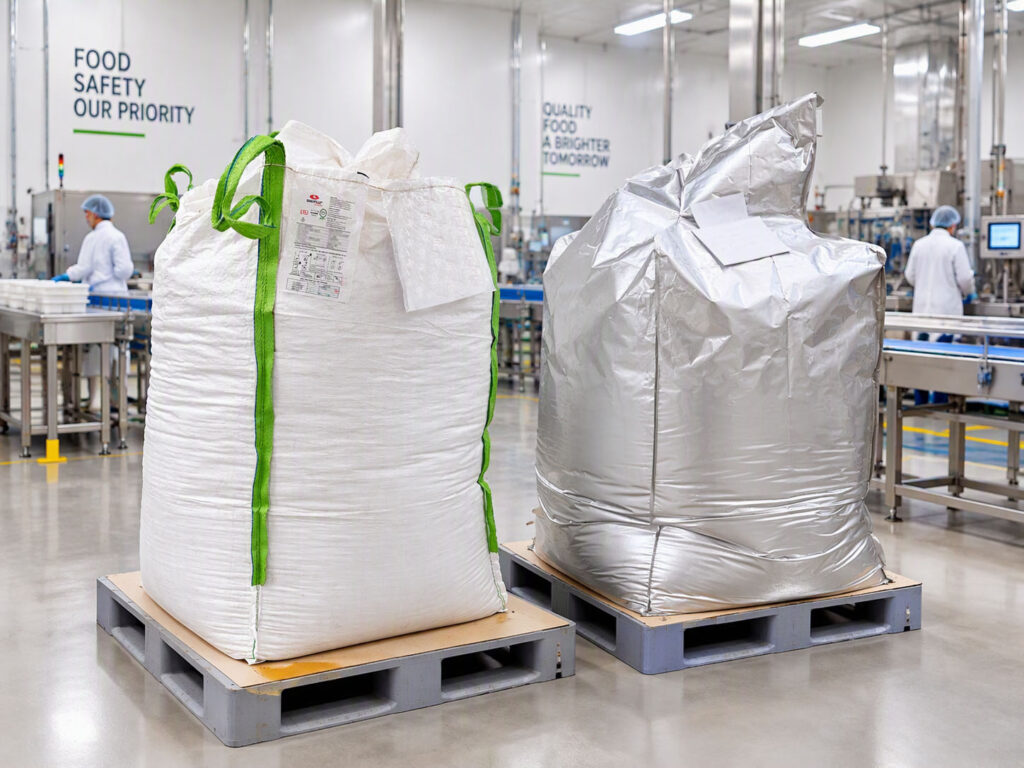
What Does Food Grade Packaging Mean?
Food grade packaging refers to materials and manufacturing processes that are considered suitable for use with food products under specific conditions. A bulk bag might appear identical to a standard industrial FIBC, but the materials used, production environment, and supporting documentation can make a significant difference.
Suitability depends on several factors, including:
-The type of food being packed
-Whether contact is direct or indirect
-Temperature and storage conditions
-Moisture content
-Product sensitivity to contamination
-Transportation and handling requirements
A food-contact approved liner alone does not automatically make the complete FIBC food grade. The entire bag design and construction should be assessed to ensure it is appropriate for the intended application.
Understanding the Application
Before selecting a food grade bulk bag, it is important to understand how the product will be packed, stored, transported, and discharged.
A finely milled powder may require a different packaging solution than whole grains or dry ingredients. Factors such as filling temperature, moisture levels, storage duration, and discharge methods can all influence the final specification.
Questions to consider include:
-Will the product contact the liner only?
-Does the product require moisture protection?
-Is oxygen barrier performance needed?
-Are there risks of dust contamination?
-Will the bags be stored indoors or outdoors?
-How many handling cycles will the bag experience?
By understanding these requirements from the outset, businesses can select a bulk bag that supports both operational efficiency and product protection.
The Importance of Liners and Barrier Protection
For many food applications, the liner provides the primary food-contact surface. As a result, selecting the correct liner specification is a key part of the design process.
Different liner options are available depending on the product and operating environment:
Standard Polyethylene Liners
Suitable for many dry, free-flowing food products and ingredients.
Form-Fit Liners
Designed to follow the shape of the FIBC, helping improve product flow and reducing excess folds.
Baffle Liners
Ideal when maintaining a square shape is important for pallet stability and efficient transport.
Barrier Liners
Used for products that require enhanced protection against moisture, oxygen, or environmental conditions.
Regardless of liner type, it is essential that the liner remains intact throughout filling, transport, storage, and discharge. Damage caused by punctures, abrasion, or poor installation can compromise product protection.
Manufacturing and Hygiene Standards Matter
Food grade packaging is about more than materials alone. The manufacturing process plays a critical role in maintaining suitability for food applications.
Reputable suppliers should operate controlled production environments and implement measures to minimise contamination risks. These may include:
-Controlled manufacturing areas
-Routine cleaning procedures
-Pest management controls
-Staff hygiene practices
-Product traceability systems
-Protected storage facilities
Many food grade FIBCs are supplied with inserted liners in controlled conditions and protected packaging to reduce exposure to contaminants before use.
Businesses should also assess how bags are transported and stored after production, as poor handling practices can affect packaging quality before it reaches the filling line.
Printing, Labels and Components
Even seemingly minor elements of an FIBC can influence suitability for food use.
Where branding or handling instructions are required, consideration should be given to: Ink selection, Label placement, Adhesives, Documentation pouches, Stitching materials and Closure components
Where possible, printing should remain external and positioned away from any potential product contact areas.
Supporting Documentation
Food manufacturers and processors increasingly require comprehensive documentation as part of their supplier approval processes.
A reliable supplier should be able to provide supporting information relating to the materials and construction used within the FIBC. This helps procurement, technical, and quality teams demonstrate due diligence and maintain clear audit trails throughout the supply chain.
Packaging regulations continue to evolve, making documentation and traceability increasingly important when sourcing food grade flexible packaging.
Selecting the Best FIBC Design
The most suitable bulk bag design will depend on both the product and the production process.
Common design considerations include:
Filling Options
Open top, Filling spout and skirt top
Discharge Options
Flat base, Discharge spout and Full opening base
Fabric Types
Coated fabrics for improved moisture resistance, Uncoated fabrics where breathability is preferred and Sift-proof constructions for fine powders
Single-Trip or Reusable
Many food businesses prefer single-trip FIBCs because they offer straightforward traceability and reduce concerns around cleaning and requalification processes.
Where reuse is considered, robust inspection and validation procedures should be implemented to ensure continued suitability for food applications. A multi trip bag – 6:1 can be used as long as the same product is put in the food grade FIBC.
Storage and Handling Best Practices
Even the highest quality food grade FIBC can become unsuitable if stored incorrectly.
To maintain packaging integrity:
-Store bags in clean, dry environments
-Keep products off the floor where possible
-Retain protective coverings until use
-Separate food grade stock from industrial packaging
-Prevent exposure to chemicals, fuels, and strong odours
-Inspect bags before filling
During transportation, bulk bags should be protected from weather, contamination, condensation, and mechanical damage. Clean transport vehicles and appropriate load restraint systems are also essential.
Why Choose Our Food Grade Bulk Bags?
We supply high-quality food grade bulk bags and bespoke FIBC solutions designed to support demanding food handling and processing operations.
Our customers benefit from:
-Reliable product quality
-Consistent stock availability
-Competitive pricing
-Fast nationwide delivery
-Custom-built FIBC specifications
-Technical support from an experienced team
Whether you require standard food grade bulk bags, specialist liners, or a fully bespoke packaging solution, we can help you identify the right specification for your operation. The goal is simple: providing packaging that protects your product, supports compliance requirements, and performs reliably throughout the supply chain.